Total Pageviews

Tuesday, 13 November 2012

Gennadi Shpalikov- The Soviet Vigo?


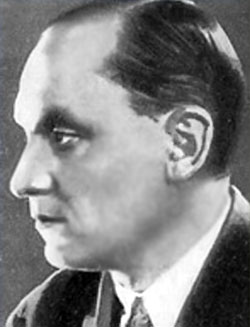
Among the many names of the 1960s New Wave in Soviet films only rarely is the name of Gennadi Shpalikov mentioned. Perhaps for the good reason that he only ever actually directed one film of his own Долгая счастливая жизнь (A long, happy life) but also for the negative reason that in the last years of his life he is said to destroyed his talent through alcohol. A third reason was that Shpalikov was not a director as such but a scriptwriter. His name is there on the credits of some of the most significant films of this Thaw period. Apart from his work on Khutsiev’s Заста́ва Ильича́ (Ilich’s Gate) as well as on Danelia’s Я шага́ю по Москве́ (I stroll through Moscow) he also wrote the scripts of some of Khrzhanovsky’s animated films including the truly great masterpiece Стекля́нная гармо́ника (A Glass Harmonica, 1968) and one of Shepitko’s extraordinary small crop of films Ты и я (You and I, 1971). Apart from this Shpalikov was an extraordinary poet in his own right. So in effect in his short life he accomplished some truly outstanding tasks and his suicide at the age of 37 in 1974 was a tremendous blow to Soviet cinema even if the blows to Shpalikov had made that act almost inevitable. Dimitry Bykov has argued, in a small piece, dedicated to the 75th anniversary of his birth this week that Shpalikov died of the fact that it was awkward for him to live and if the main theme of Dovlatov was irritation and if Chekhov was the poet of disgust or fastidious (брезгливость), then Shpalikov’s was an excellent chronicler of awkwardness.


The only film that he directed is yet one more of those not altogether rare exemplars in Soviet cinema that betrayed a real link to French Poetic Realism. And it is, perhaps, not too great an exaggeration to call him a kind of Russian Vigo as well as someone whose links to The Silver Age of Russian literature are also present. His fine sensibility towards details and intuition of emotional states make his single film one of those many films which need to be rediscovered alongside the films of the more prolific and well-known directors of the period. Alongside the rare films of Mikhail Bogin and Mikhail Kalik, Gennadi Shpalikov is another of those who forged a Soviet poetic realism- worthy successors of the Vigo’s and Rene Clair’s of the French school.

Saturday, 10 November 2012

FEKS, Trauberg and G.K. Chesterton


In my last post I wrote about the prevalence of chemical warfare paranoia movies in the 1920s Soviet Sci-Fi genre. This genre is rather broader than that. One can locate some of the paranoia films also in another sub genre. For example, Barnet and Otsep's Мисс Менд (Miss Mend) in particular could be seen as exemplifying Red Pinkertonism. This was partly an answer to a call by Nikolai Bukharin  in late 1921 to use the 'street (or vulgar) genres' (Бульварные жанры) for agitational purposes. One of the many currents of 1920s Soviet cinema exploited these ideas to the full, That current was, of course, that of the FEKS (or the Factory of the Eccentric Actor). They stated in their manifesto: "The boulevard brings revolution into art. Today our street dirt consists of the circus, cinema, the music hall and Pinkerton". In many ways the paranoic chemical warfare films should be seen as ironic paranoia films.

Nevertheless, the depth of the 'death ray' genre in literature as well as in film in the 1920s is a fascinating story and did actually stem from an actual news story. A British inventor/charlatan Harry Grindell Matthews made claims between 1923 and 1924 that he had invented such a device. (In 1921 he had also claimed to have invented the world's first talking picture in an interview with Ernest Shackleton). Writers such as Valentin Kataev in his Повелитель железа (Lord of Iron, 1925), Nikolai Karpov Луч Смерти (Death Ray, 1925) as w ell as Anatolii Shishko in his Аппетит микробов (Appetite of the Microbes, 1927) and Viktor Shklovsky and Vsevolod Ivanov's novel Иприт (Mustard Gas, 1925) all took on this theme in some way or another. The latter novel was to influence one of the lost films of FEKS Мишки против Юденича (Mishka against Yudenich, 1925).

Yet perhaps one of the most curious influences on FEKS was outlined in an article by M.E. Malikova entitled НЭП, ФЭКС и "Человек, который был Четвертом" (NEP, FEKS and the Man who was Thursday). She argues that Leonid Trauberg's preface to an abbreviated translation of G.K.Chesterton's The Man who was Thursday in 1923 can be seen as a central text in the development of FEKS (and adds the tantalizing suggestion that Trauberg himself could well have been the translator of this text). The translation itself (not the first translation of the novel which was printed in Russia during the First World War) is not merely an abbreviated form of the novel but even has a different ending in which the fat character Sunday instead of answering all the questions during his interrogation jumps out of the window. That this translation was printed at about the same time of the formation of FEKS offers us a new reading of the phenomenon of eccentricity in Soviet cinema. Chesterton would later become a highly popular author in the Soviet 1920s but he was still relatively unknown in the early 1920s. In any case the Chestertonian influences on Soviet eccentricism is one of those fascinating stories that make a study of the Soviet 1920s so exhilarating. A latter-day Walter Benjamin looking for some equivalent to the Arcades Project would surely choose the Soviet 1920s as his overriding obsession.

A few months ago the Lacanian Marxist Slavoj Zizek came in Moscow to give two lectures: his lecture on Hegel in particular was full of references to G.K.Chesterton's theology. One can only regret that Zizek himself wasn't around in the Soviet 1920s- he surely would have made a perfect actor and script-writer for Trauberg and Kozintsev's FEKS.

Thursday, 18 October 2012

Soviet Science Fiction (1)- Not just space travel...1920's sci-fi paranoia films.


The story of Soviet science fiction cinema has got considerably more attention in popular circles than it has in academic circles and one finds occasional blog pieces on films which have been almost totally ignored in histories of Soviet cinema. It has been a genre left to the enthusiasts rather than the scholars. Of course there are the films by the likes of Tarkovsky and Lopushanksy as well as the earlier Protazanov Soviet science fiction debut Аэлита (Aelita, 1924), the Stalin era Космический рейс (The Space Voyage, 1936) and the cult Daneliya film Кин-дза-дза (Kin-Dza-Dza) which have been commented on and analyzed by film buffs and scholars alike but the scope of Soviet science fiction hasn't had its comprehensive monograph. Again science fiction can surely not be relegated to space travel as most accounts and recent retrospectives seem to have done. For each Aelita or Межпланетная революция (Interplanetary revolution, 1924) - incidentally, also based on Aleksei Tolstoy's novel there were other science fiction fantasies.


Flights to space were accompanied with fears of new weapons of warfare- especially chemical warfare. Therefore, Kuleshov's 1918 Проект инженера Прайта (The Project of Engineer Prite) should surely be seen as being the original film of Soviet science fiction. His later Луч смерти (Death Ray, 1925) was a continuation of this theme in Kuleshov's filmography:


The mid 1920s seem to be a prolific time for this theme of chemical warfare- Semyon Timoshchenko's film about an imperialist chemical warfare attack on Наполеон-газ (Napoleon Gas, 1925) Leningrad was almost replicated in Barnet and Otsep's Мисс Менд (Miss Mend, 1926) in which three American reporters try to stop a biological attack on the Soviet Union by powerful American businessmen:


It was only later that space travel overtook chemical warfare paranoia's as the dominant theme in Soviet science fiction.

Among the Soviet science fiction films of the 1920s that have been lost are the following :

Nikolai Petrov's Аэро НТ-54 (Aero NT-54) about the development of a powerful aeroplane engine around which a furious struggle took place (between capitalist countries and the Soviet Union?)- the film was made in 1925 but withdrawn in 1928 (it's uncertain whether due to questions of quality or ideology). The scriptwriter Nikolai Surovtsev based it on a thriller of his own.

Another 1925 film by Yakov Morin called Коммунит (and also Русский газ) and was based on the idea of the invention yet again of a paralyzing gas this time to be used to defend Soviet Russia from imperialist invaders.

Before the 1920s, in 1919 film fragments of a science fiction version of Jack London's Iron Heel based on a script by Lunacharsky were shown during a theatrical show. Existing reviews of this were quite positive, although none of the fragments have survived. The fragments were filmed by a number of directors including Vladimir gardin and Olga Preobrazhenskaya.


Wednesday, 17 October 2012

Two Films of Mikhail Bogin - One of Russia's Poetic Realists.


The fact that each generation of Soviet filmmakers contained a broad constellation of directors whose names are far too many to mention (or even to remember) is true not only of the truly revolutionary 1920s (and my recent post on Chervyakov mentioned just one of the hidden greats still to be fully rediscovered) but also of other decades. The directors who worked in the late Thaw/ early Stagnation period is certainly no exception. Of course, all will know of Tarkovsky and Paradjanov and many of the readers of this blog will know of Muratova, Klimov, Shepitko, Danelija, Askoldov and maybe Panfilov, some others may know or have heard of Alov and Naumov, Gaidai, Motyl, Ozerov, Bondarchuk, Rostotsky, Khamraev, Averbakh etc. Yet there are also other names in Soviet film of this period- among them are the makers of only two or three films, and also among them are a number who later were to become emigre filmmakers- leaving either for Israel, the United States or some other country . Mikhail Kalik may be the most well known of these filmmakers but there was another filmmaker two of whose Soviet-era films were shown tonight at what is now the main location for a reborn Museum of Cinema in Moscow, the Mossovet- this filmmaker is Mikhail Bogin.

The two films on show tonight introduced both by the director himself as well as by the director of the Cinema Museum, Naum Kleiman - were his short 1965 film Двое (The two, but also known as The Ballad of Love ) as well as his later 1971 film О любви (About Love). Unfortunately only the first film was viewable- the quality of the DVD projection of the second film was so bad as to impair any genuine aesthetic reception of the film - even if the atmosphere and tone of the film was so powerful that at least this one aspect was transmitted very well. Nonetheless, in spite of this, what seemed clear was that here was another candidate for reappraisal and rediscovery. The first film Двое was well noted at the time - it in fact won one of the two FIPRESCI prizes at the Moscow International Film Festival and the New York Times review in early 1966 was extremely fulsome in its praise. The critic Howard Thompson wrote about the film the following:-

See "A Ballad of Love," whatever you do. It was made at the Riga Studios in Latvia, under a young director of uncommon skill and insight named Mikhail Bogin, who wrote the screenplay with Yuri Chulyukin. Ever so simply and sweetly, minus one drop of saccharine, the picture conveys the growing love of the spirited oboist and the beautiful girl in her silent world who studies at a pantomime theater for deaf mutes.
"What is music like?" she scribbles. There is a moment of freezing beauty with the boy watching the girl as the balcony scene from Romeo and Juliet is pantomimed on the stage. The picture is most effective when the sound track goes silent, as at the climax when the deaf girl attends a concert.
The film clips off abruptly. If only it could have gone on and on.


And yes there is much to say about this short film and its strange melodramatic tale of love between the two main characters of the film. Naum Kleiman was surely right to connect Bogin's place in Soviet cinema to the trend of Poetic Realism which has Boris Barnet at its centre. And this film surely signalled something of a unique experiment with its discourse between the worlds of silence and noise. Bogin's next film, although as I stated shown in a truly deplorable condition, was equally entrancing. The same actress- Viktoria Fyodorova - who died recently and whose incredibly tragic destiny is known to many Russians and Americans (a daughter of a famous Stalin era actress who was born to an American diplomatic attache' and who, like the director, emigrated later to the US) - managed to create in both films an atmosphere which mixed a melodramatic love story with a melancholic poignancy that seemed so deeply imbued with some difficult to pinpoint late thaw mood- a particular doleful note  that can almost be dated to the late 60s and 1970s (present, for example, in Shepitko's Крылья [Wings] of 1966).

These two films by Bogin seem to show how, like the great Barnet himself, he was a great actors director - the second film certainly proves how he was to work with many actors who would only later be known as great actors. They also point to how the existence of a Russian Poetic Realism is a subject still yet to be fully explored by film scholars.


. 

Tuesday, 16 October 2012

Food, drink and restaurants in Russian and Soviet Film (1)

If Khlebnikov's new film didn't quite do justice to the theme of restaurants in contemporary Moscow one can, however, reflect as to how food and restaurants have been used in previous films both from the Soviet through the post- Soviet period (as well as in the pre-Soviet period).

The end of the Khlebnikov's film involving the restaurant fight of course had its predecessor (and surely much more of the film) in Ryazanov's Дайте жалобную книгу (Give me the complaints book) 


Ryazanov's film from the Thaw is replete with scenes that had their replica in the Khlebnikov film- the surly waiters, the annoying or pretentious music etc. However, there is surely no greater small scene from Soviet cinema capturing the awfulness of  restaurant atmosphere and their clients than Danelia's Афоня (Afoniya) in ths small sequence of Kuravlev's drunk dance in front of one of film's least inspiring restaurant bands:


The food scene in Eisenstein's great film Брононосец Потемкин (Battleship Potemkin, 1925) is, of course, essential. Doctor Smirnov's certification of rotten meat full of maggots sets off the whole mutiny in the first place. 


Food and radical social critique (or at least outraged sensibility) is also not absent in Kira Muratova's films. One of the most radical scenes in recent post-Soviet cinema is the shoplifting scene where rich jeunesse doree shoplift immense quantities of food and drink as entertainment (with the complicity of the supermarket management) while a starving orphan who shoplifts some bread to stay alive is arrested and persecuted. This scene not found on YouTube is complemented by another in the film where the two starving children are left to look at an idyllic Christmas scene through a window - the food on the other side of the window a reminder of their obscene hunger:


The splendid semi-animated sequence in Andrei Khrzhanovsky's film Полторы комнаты или сентиментальное путешествие на родину (A Room and a Half or a Sentimental Journey to the Homeland) based on the Stalin era Soviet cookbook named 'The Book on Tasty and Healthy Food' (Книга О Вкусной И Здоровой Пище) in which Joseph Stalin appears as cook who shows the young Brodsky all the delights of Soviet cuisine reminding him that they are not for him is another kind of using food as critique (this time of Stalinist anti-semitism):


Khlebnikov's film is, of course, a comedy and food as comic pretext is present again and again in Soviet films (from Alexandrov's early musicals through to Danelia and Ryazanov's sad comedies- whether through the New Year feast in Ирония судьбы (The Irony of Fate) or the restaurant scene of Мимино (Mimino). 

Monday, 15 October 2012

Boris Khlebnikov's Пока ночь не разлучит (Till Night do us part)

On another blog today radical food film scenes I was trying to choose what I found were the most radical food themed scenes and films and then I left home to watch this new film by Boris Khlebnikov which was set in a restaurant and based on material collected by journalists of Moscow's Большой город at one of Moscow's central deluxe restaurants. A lot was to be expected from Khlebnikov who is one of Russia's new wave directors and there was some fine work after his joint film with Alexey Popogrebsky Коктебель (Roads to Koktebel, 2003)- his film Свободное Плавание (Free Floating, 2006) showed extraordinary promise and even his Сумасшедшая помощь (Help Gone Mad, 2009) had one scholar comparing his work to that of Balabanov, Muratova and German Jr. Marcia Landy . However, with this film after recalling all the films by Ferreri, Bunuel, Chytilova, Pasolini, Olmi et al which managed to turn food into philosophy radicalism, Khlebnikov's contribution this time seemed very slight indeed. And yet, the ideas were (or could have been) there- the class divisions, the hierarchy and the snobbery, the kitchen as social microcosm, - but somehow too much seemed to get in the way. The invitation of Leningrad musician Sergei Shnurova in the film lead to one diversion, and the obsession with the mobile conversations lead to another, the kitchen personnel problem was solved by yet more phone calls from the chef. The final denouement also seemed based on a rather strange pretext of a rather absurd (and artificial) conflict between the waiters- and the restaurant fight seemed much less apocalyptic and rather too wearily filmed (Shnurova gesture too seemed predictable long before it finally came). This, of course, was comedy but not the comedy of Riazanov or Danelia - but rather a much more dispersed and fragmentary comedy- a comedy that relied on many dispersed conversations and situations that didn't quite hold within them the philosophy or vision of a whole. If this really is the better offering of the 'new quiet ones' ( a denomination used by Khlebnikov himself to denote the Russian New Wave), this phenomenon seems to be at risk of ending with a whimper rather than a bang.

Friday, 12 October 2012

Evgeny Chervyakov and the rediscovery of his masterpiece Мой сын (My Son, 1928)


While most film buffs know of the extraordinary rediscovery of extra reels of Fritz Lang’s Metropolis in Buenos Aires’s Cinema Museum in 2008 another rediscovery by Fernando Martín Peña of the same year at the same location has gone relatively unreported. Yet this rediscovery has been justifiably called by Russian film scholar Pyotr Bagrov “the biggest archival find in the history of Russian film for the last fifty years” and comparing its significance with the time when the second part of Eisenstein’s Ivan Grozny was finally released in 1958. In 2008 five reels of a 16mm copy of Evgenii Chervyakov’s Мой сын (My Son, 1928) was discovered with an attributed title El Hijo del otro (Another’s Son).  This discovery has led film scholars like Pyotr Bagrov to claim that this rediscovery in many ways rewrites the history of early Soviet cinema. The loss of Cherviakov’s films from the 1920s meant that he was considered as a rather insignificant figure in Soviet cinema and rarely written about. Bagrov goes as far as saying that one almost regrets that his later films remained as they give an altogether false view of the great stature of this filmmaker. The films of the late 1930s which have been preserved were, sadly, propaganda films about wreckers, collective farms and, in the case of his Заключённые (Prisoners, 1936) a film about the ‘moral regeneration’ of Gulag internees based on Pogodin’s book Aristocrats. While it may have some slight cinematographic interest (for example, it was the first film in which the great actor Mark Bernes was to play a role) none of these later films can be said to give Chervyakov any significant role in Soviet cinematic history. Bagrov was to state that Cherkyakov was to work under a state of severe depression in this period and it seems it would be most unfair to portray Chervyakov’s place according to these extant films.

That is why the loss of his 1920 films were such a tragic affair. The statements from his contemporaries prove that he was one of the true giants of 1920s Soviet cinema. He was to work as much as an actor in the early years and was, for example, to play Pushkin in Vladimir Gardin’s Поэт и царь (Poet and Tsar, 1927) as well as a soldier of the National Guard in Kozintsev and Trauberg’s classic film on the Paris Commune Новый Вавилон (New Babylon, 1929). Yet it was his reputation as director that truly impressed his contemporaries. Contemporaries like Sergei Yutkevich, Mikhail Bleiman and Leonid Trauberg. Perhaps the most significant comment was by the great Aleksander Dovzhenko. Dovzhenko exceedingly rarely praised any other film director and was never known to have admit of any influence by any other director. With the sole exception that is of Evgenii Chervyakov. Dovzhenko’s words, therefore, that “Этот человек может сделать много хорошего. Он первый создал у нас лирический жанр, и я многое у него воспринял” ( [Chervyakov] is able to do great things. It was he who first created the lyrical genre in our cinematography and I learned a lot from him) signify high praise indeed from Dovzhenko. Indeed, Chervyakov seems to have been a major influence according to Bagrov in his work with the close up. Bagrov goes on to speculate as to how it may have influenced Pudovkin’s experimental work Простой случай (A Simple Case, 1931) and the idea of the ‘emotional scenario’ that was to become significant in the early 1930s.
Apart from this major influence on Dovzhenko (arguably the only real influence on Dovzhenko given how individual a director Dovzhenko was), Chervyakov could be said to play an absolutely unique role in the Soviet twenties- his was a style that strayed from the montage, fast cutting techniques of others (the Eisenstein, Kuleshov, Vertov etc) but was also unlike those who didn’t make montage their god. Bagrov contrasts Chervyakov with those directors, like Abram Room or Boris Barnet, who were interested in contemporary social morals, manners, mores rendered by the Russian word быт. As contemporaries remarked, Chervyakov’s films had nothing that showed that they took place in the Soviet Union. They could as easily been a film about any other society (something which is clearly not true of, say, Room’s Третья Мещанская -better known in English as Bed and Sofa, 1927). Bagrov looking for films which could have influenced Chervyakov casts his glance away from early German cinema to that of French cinema and sees only one film that seems to have played a major role in influencing him- that of Jean Epstein’s 1923 drama Cœur fidèle (or Faithful Heart). As for contemporary comparisons of Chervyakov’s rediscovered film, Bagrov suggests that there are immense similarities with Dreyer’s La Passion de Jean D’Arc (The Passion of Joan of Arc) as to how they build their dramaturgy with the close up and it is curious that these two films were shot almost simultaneously. Another name that Bagrov uses in conjunction with Chervyakov is that of Dmitry Kirsanov, one of the most fascinating émigré filmmakers most well-known for his avant-garde film made in France Ménilmontant (1926).

Even in the 1920s Soviet commentators were stating (often while severely criticising him) how Chervyakov was ahead (rather than behind) his time and it is something that seems to have been borne out. Bagrov suggests that Chervyakov’s work can be said to have been the first sign of existential cinema and points to the many scenes where the director highlights a lack of communication between the protagonists. For example, in the film a long conversation may be rendered by a two word intertitle as though specifically to highlight that however much the characters talk little is actually being communicated. This existential cinema was to be much later (three to four decades later in fact) championed by the likes of Antonioni and Resnais as well arguably, in Soviet cinema, by Marlen Khutsiev. Another witness to the significance of Chervyakov as director was the actress Anna Sten who had played in Barnet’s comedy Девушка с Коробкой (Girl with a Hatbox, 1926) and went to act in the films of such directors as King Vidor, Raoul Walsh and Rouben Mamoulian who stated that Chervyakov was probably the greatest director she had ever worked for.
 
It can only be hoped that soon Chervyakov’s rediscovered masterpiece will one day soon be available to more wide audiences than the odd screening at film festivals and retrospectives. One can only mourn the louder for those other films made by him in the 1920s that seem to have been forever irretrievable. One must not forget either the work of his cameraman Svatoslav Belyaev who worked with him on this and on his other lost 1920s films and whose reputation should be compared with that of the great Andrey Moskvin. Both Chervyakov and Belyaev would die in the fighting for defence of their city, Leningrad in the same year, 1942.

Thursday, 11 October 2012

Paradjanov: The House Where I Live: Exhibition in Moscow

This Autumn a small exhibition of Paradjanov's collages, photomontages, icons and various other art pieces is being held at Moscow's Новый Манеж (New Manezh) exhibition halls. Here is a selection of some of the exhibits on show:


Tuesday, 9 October 2012

Pyotr Lutsik's & Aleksei Samoryadov's Окраина (The Outskirts)


Today it was announced that the scriptwriter Eduard Volodarsky has died - the author of some of the most significant films of recent times including many of Alexei German's classic masterpieces as well as a number of films by Nikita Mikhalkov. He was also the author of a television series filmed by Sergei Ursuliak based on Vassily Grossman's great novel about the 'Great Patriotic War' (as it is known in Russia and much of the former Soviet space) Жизнь и Судьба (Life and Fate). Scriptwriters are all too often ignored although ironically in the Stalin period it was more often they (and not the directors) who were held to account for a 'harmful' (or politically incorrect) film. It is probable that the greatest of post-Soviet screenwriters were two who tragically could not fulfill their full potential because of their early deaths: Pyotr Lutsik & Aleksei Samoryadov who died within less than a decade of each other (Samoryadov in 1994 and Lutsik in 2000). 

Surely one of the greatest films of the 1990s was, in retrospect, the Lutsik directed Окраина (The Outskirts, 1998) which resurrected the Soviet film in the Post-Soviet era both defying and superseding an epoch of retreat and horror of sovok. In Lutsik’s film, the Soviet film was back as allusion and model with a thunderous revenge just like the revenge on Moscow from the outskirts wreaked in the film. Reading back on interviews of the time this film was to be one of those films which had a very frosty reception given how it had broken some sacred cows of the epoch: there were even some calls for the film to be banned for its supposed incitement to violence by those who had lost everything (and above all their land) during the Yeltsin wild nineties. Reading the comments of some well respected critics including, for example, those of Lev Anninsky, Miron Chernenko or Tatiana Moskvina, one understands that few critics at the time were able to discover original and dispassionate ways of reading the film.

The scripts of Lutsik and Samoryadov betrayed a rejection of the psychological realism predominant in late Soviet times but not by the path favoured by most in the 1990s (by immersion into the post-modern worlds of chernuka , glamour or imperial fantasies) preferring rather a return to the epic films of the 1930s and 1940s even if epos was mixed with styob. This post-Soviet return to the style if not quite the substance of Socialist Realist classics (as well as choosing a politically incorrect subject line for the reactionary 1990s with its imperial fantasies and exaltation of capitalist glamour) was an incredibly risque' one.  While Lutsik’s Outskirts copied the title of a film by Barnet of the early 1930s it was perhaps the mythical Чапаев (Chapayev, 1934) that is alluded to most in Lutsik’s film (but then the film is so full of allusions that one feels that it is a kind of declaration of love for the Mythological period of Socialist Realism. Yet at the same time, as the critic Elena Gracheva has argued, it also recalls the bylina tales about Ilya Muromets and Mikula Selyaninovich and thus the mythos of the film is much more deeply rooted in Russian culture than many critics had argued.

This epic which combined the search for social justice, the road movie and a typical Russian бунт (revolt) with the idea of the periphery wreaking its, at times sadistic, revenge on an indifferent oligarchic elite and on the centre (here Moscow) as well as on those who served this elite was read as a manifesto. Perhaps both rightly and wrongly. In many ways it was a manifesto but just as much a cinematographic as a social or political manifesto and, in some ways, a manifesto still yet to be heeded. It has had few followers and even in the following decade and a half there are few films that can be said to have been influenced by it. Thankfully there have been signs of a Russian New Wave, (even if these signs have been weaker than one would have hoped) but it still seems that too many have continued to film as in the nineties as though Lutsik and Samoryadov's film never happened. Their attention to a powerful cinematographic tradition went unheeded and shows us simply one of the directions towards which post-Soviet Russian cinema could have developed but didn't manage to do so. However, as the writer and critic Dmitry Bykov pointed out at one point, the various film scripts of Lutsik and Samoryadov, perhaps, still have yet to find their epoch. They were, it could be argued, too far ahead in their nostalgia. Perhaps as Chris Marker indicated in his film on Medvedkin it'll be a new generation that will have such an affection for the Soviet dinosaurs.